
Wild Summer
Explore and enjoy the best of the season’s wildlife
Purple reign
Lowland heaths form some of our wildest landscapes and Berkshire has the largest expanses of this habitat within our three counties. From June through to September drifts of pink and purple flowers host more than 30 species of butterflies, including the expertly camouflaged grayling.
The intense colours of purple-pink bell heather, pink-flowered cross-leaved heather, and the taller, lilac-pink blooms of ling thrive on our nature reserves. This heathland is also home to the nationally rare nightjar. These cryptic, ground-nesting birds are more easily spotted at dusk or dawn as they hunt for insects, and the males display to females. Listen too for their distinctive rattling ‘churr’ call.
Explore Berkshire heathland at Snelsmore Common, Greenham and Crookham Commons, and Wildmoor Heath. Senior Land Manager Roger Stace offers a taste of what to expect: bbowt.org.uk/blog/special-places-hiddenstories-2
Take a tour of Greenham and Crookham Commons
Join Roger for a virtual tour of Greenham and Crookham Commons nature reserve. This site forms the largest continuous tract of open heath in Berkshire with a mix of purple and pink heathers and golden yellow gorse, plus wildflower-filled grasslands and expanses of bare gravels – all easily accessible.
Whiskers at dusk
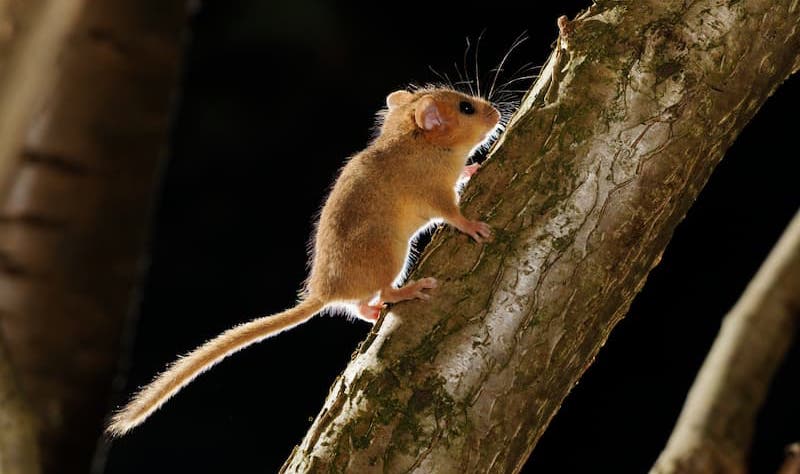
Hazel dormice are elusive, woodland mammals with large black eyes, golden-brown fur and long black whiskers. Their tiny size means that a fully-grown adult would fit neatly in the palm of the average hand.
These nocturnal animals sleep during the day in nests woven from leaves, grasses and shredded honeysuckle bark. On spring and summer nights they scamper along branches and up and down tree trunks foraging for food including flowers, nectar from honeysuckle, berries, and insects. Then during the autumn the dormouse is on a mission to put on weight ahead of its six-month hibernation, with hazelnuts and other fat and protein-rich foods on the menu.
Every summer our ecologists record the numbers and weight of dormice in our woodland reserves. While dormice have undergone significant declines in recent decades, several dormice, including young, were discovered in monitoring boxes at Moor Copse last year – the first to be recorded in boxes since 2016, and very encouraging news for a species under threat nationally.
Did you know?
Shell out: To get at the tasty kernel inside a hazelnut, dormice gnaw a distinctively smooth, round hole in the shell.
Chill out: If food is scarce, dormice drop their body temperature and go into a state of torpor.
Rest up: Dormice spend up to six months ‘asleep’ in some form.
- At Warburg Nature Reserve, Chinnor Hill and other woodland reserves we coppice hazel to stimulate new growth, which results in more food for hazel dormice.
Late-flying butterflies
Brimstone
Peacock
Comma
Painted lady
Woodland gardeners
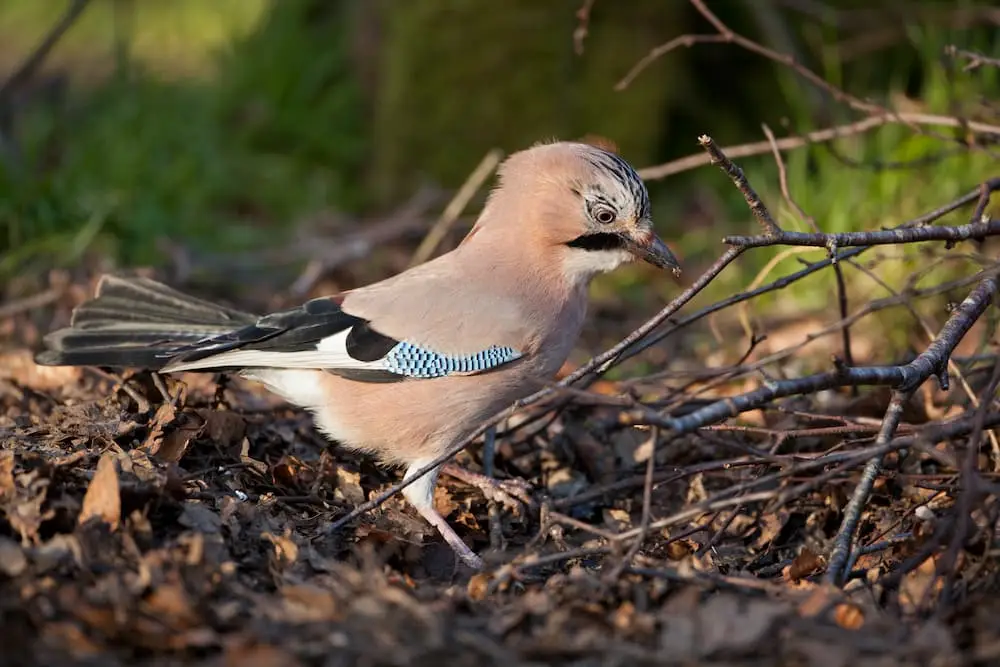
On woodland walks this autumn, listen out for the screech call of a jay and watch them gather acorns beneath mature oak trees. These woodland gardeners fill their beaks then cache acorns in deep leaf litter to retrieve later in winter. Many acorns remain uneaten to emerge in spring as tiny oak seedlings.
LOOK OUT FOR
TRY THIS
Contents
Image credits: Heather at Snelsmore Common: Pete Hughes; Hazel dormouse: Terry Whittaker/2020VISION; Jay: Mark Hamblin/2020VISION; Ivy bee: Jane Adams