Get to the bottom of bottom trawling with Daniele Clifford, marine conservation officer for The Wildlife Trusts.
I’ve known about the impacts of bottom trawling for years. But like many others, last year I sat in the cinema watching Ocean with David Attenborough, stunned to see the reality of this fishing method on the big screen. The giant net and heavy chains bulldozing the seafloor, stirring up sediment and destroying the burrows of countless creatures in seconds. Fish and other wildlife of all shapes, sizes and ages swimming for their lives… only to be sucked into the vast yawning net and later discarded, dead, back into the sea.
This incredible footage has stuck with me and millions of others around the world. For too long the impacts of bottom trawling have been out of sight and out of mind. Thankfully the tide is starting to turn, but we still have a long way to go.
What is bottom trawling?
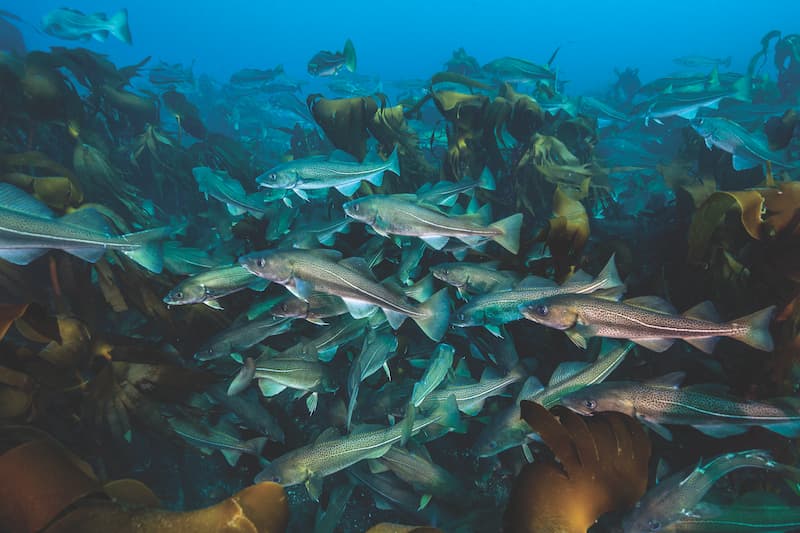
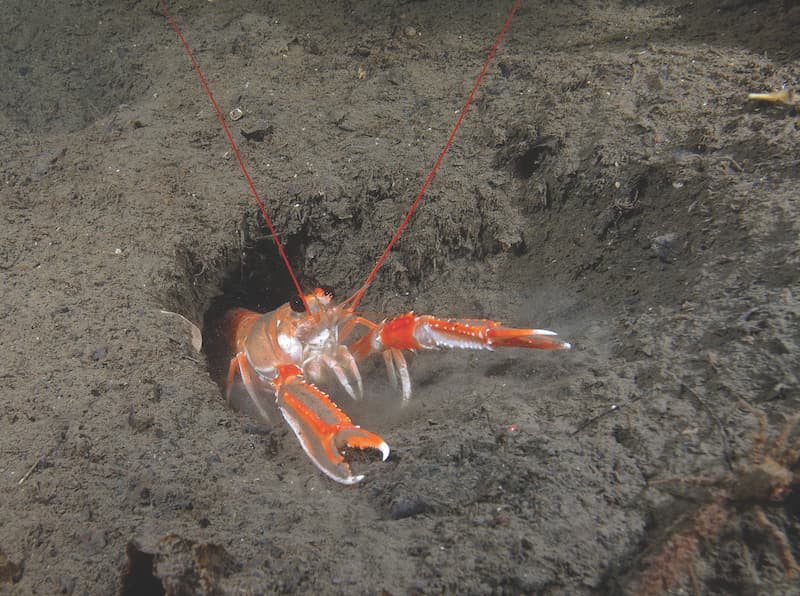
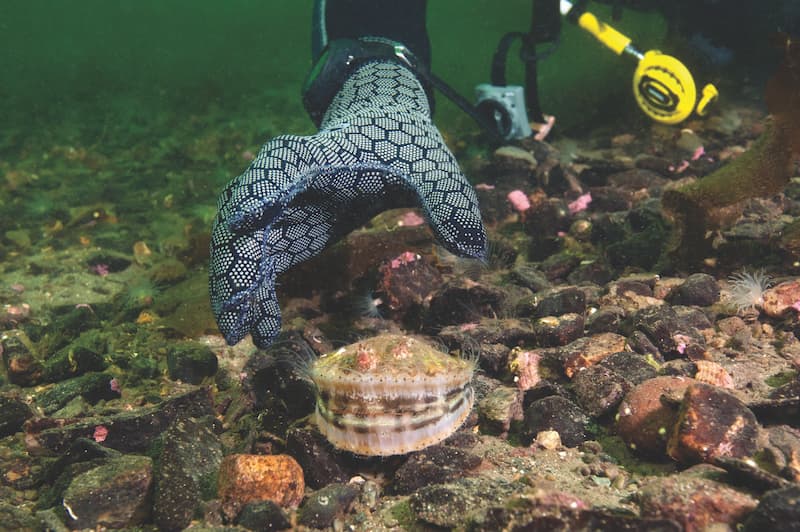
Bottom trawling is a method of fishing that drags heavy nets and chains along the seafloor. It is used to catch fish or shellfish that live within or just above the seabed. Bottom trawling is largely used as it enables fishers to catch large amounts of high-value fish, including whitefish like cod, haddock and hake, and flatfish such as halibut and sole. Shellfish like nephrops and shrimp are also targeted using this method.
Discards and destruction
Fishers using bottom trawling often only want to capture one or two fish species (the ‘target species’), but the nets catch almost everything within their path. Everything the fishers don’t want is thrown back into the sea (called ‘discards’). This may be more than three quarters of the catch! These discarded fish and other wildlife may be killed, injured or at least extremely stressed by the process.
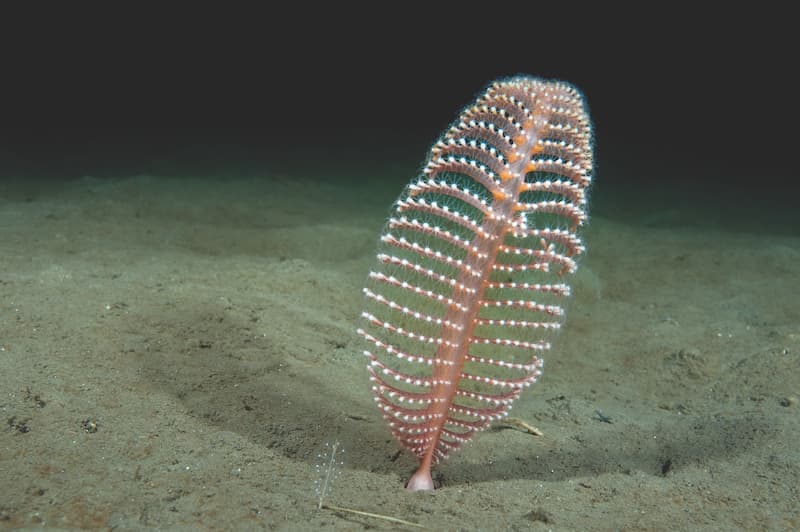
Intensive trawling also causes damage to the seabed. It reduces the diversity of wildlife, wiping out long-lived species, damaging or removing fragile reef-forming animals and destroying the 3D structures they create. The many surfaces and crevices of a healthy seabed provide key nursery, feeding and refuge areas for wildlife, including commercially important fish and shellfish. When these are destroyed, entire ecosystems begin to unravel.
There are potential implications for the climate, too. It’s estimated that there are around 240 million tonnes of carbon in the top 10 cm of seabed sediments in the UK and Isle of Man’s seas — mostly in our marvellous marine mud. When trawling disturbs sensitive carbon-rich sediments, it risks releasing this carbon.
Our seas are a shared resource. Unsustainable fishing not only harms wildlife, but also the other people and economies that rely on healthy seas for their livelihoods, cultures and recreation.
Fair and sustainable future for fisheries
Protecting our seas doesn’t mean leaving fishers behind. We need a just transition where fishing communities, scientists, governments and other stakeholders work together to shape the future of fishing across our wilder seas. This includes finding innovative ways to reduce the environmental impact of fishing gears and practices, as well as supporting and incentivising fishers to transition to these more sustainable methods. This is essential, not just for wildlife, but for the people who depend on our seas.
Seabed sanctuaries
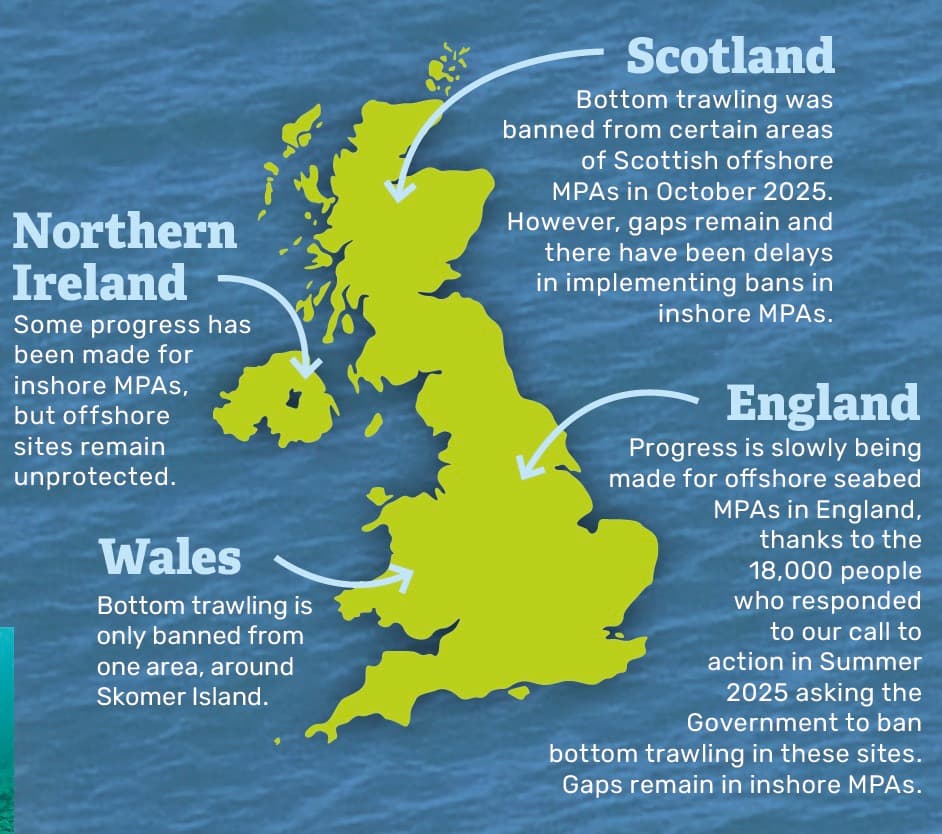
The UK has 377 Marine Protected Areas (MPAs), created to protect special habitats and wildlife at sea. This is an impressive number, but sadly many still allow damaging activities within them. Some progress has been made, but many MPAs with important seabed habitats are still partially or totally open to bottom trawling. This needs to change.
Our marine ecosystems can bounce back spectacularly when properly protected. Banning bottom trawling in MPAs would be a strong step in the right direction. There’s a wealth of scientific evidence that shows well managed and enforced MPAs are a vital tool for restoring ocean health. But they are only effective if damaging activities are not allowed within them.
The Wildlife Trusts have been campaigning for the banning of bottom trawling in seabed MPAs since these special sites were designated, many more than 10 years ago. Recently, we have seen some progress, but we need to keep the pressure up!
Progress in the UK so far:
Before
A healthy seabed in its natural state.
After
A seabed destroyed by bottom trawling.
A fair and sustainable future for fisheries
Protecting our seas doesn’t mean leaving fishers behind. We need a just transition where fishing communities, scientists, governments and other stakeholders work together to shape the future of fishing across our wider seas. This includes finding innovative ways to reduce the environmental impact of fishing gears and practices, as well as supporting and incentivising fishers to transition to these more sustainable methods. This is essential, not just for wildlife and carbon, but for the people who depend on our seas.
What you can do
If you eat fish, use The Good Fish Guide (mcsuk.org/goodfishguide) to choose more sustainable seafood.
Write to your MP and ask them to support banning bottom trawling in Marine Protected Areas and a just transition for fisheries.
Sign up for our Friends of Marine newsletter to stay up to date with marine news and ways you can help protect our seas: wtru.st/marine-mailing
Image credits: Small-spotted catshark: Henley Spiers/naturepl.com; Atlantic cod: Alex Mustard/naturepl.com; Norway lobster: Paul Naylor; Sea pen: Alex Mustard/2020VISION; Scallop fishing: Alex Mustard/2020VISION; Before and after photos: Coast/Howard Wood; Thornback Ray: Paul Naylor