
It's a scream!
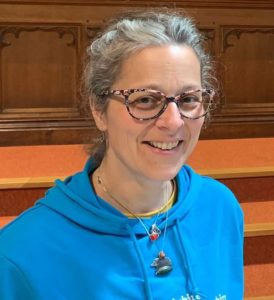
Each year, swifts sweep back across our skies, bringing with them a sense of wild freedom and the promise of summer. In Crowthorne, a growing community project is helping them find a home once more, as BBOWT’s Community Organiser and Swift Champion, Barbara Polonara, explains.
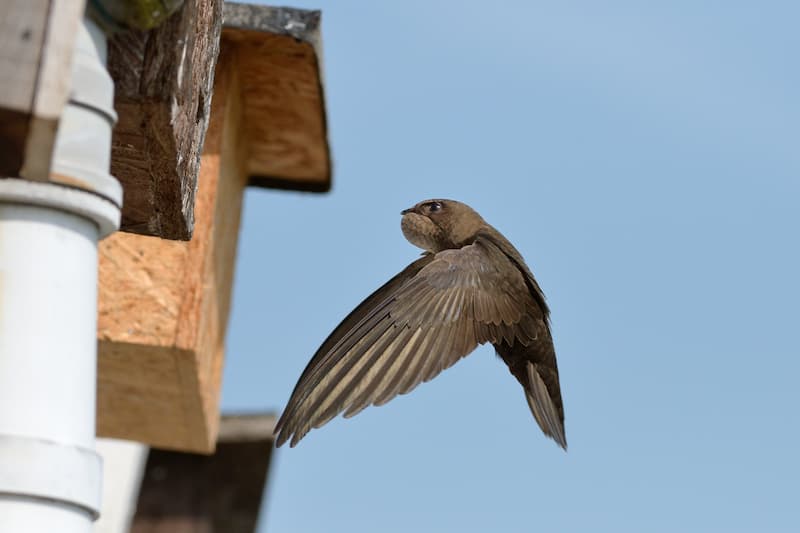
There are few sounds more evocative of summer than the high-pitched scream of swifts racing overhead. For many of us, it’s a fleeting joy and a reminder to look up. Yet for these remarkable birds, their time with us is brief and precious, and increasingly under threat.
Swifts spend almost their entire lives on the wing. They eat, drink, sleep and even mate in flight, only landing to nest. The birds that arrive over our patch every May have travelled thousands of miles from sub-Saharan Africa, navigating continents to return to the same streets and rooftops they used the year before. Yet, across the country, their numbers have plummeted by more than 60% over the past 25 years, largely because the buildings they depend on are changing.
Just as in many towns and villages across our counties, swifts were once a familiar sight along the High Street of Crowthorne, Berkshire. Today, they are far less common. Modern building practices have sealed up the nooks and crannies these cavity-nesting birds rely on, leaving them with fewer and fewer places to breed.
Swift action
That’s where the Crowthorne Swift High Street project comes in. The idea began simply enough: a shared determination to bring the swifts back.
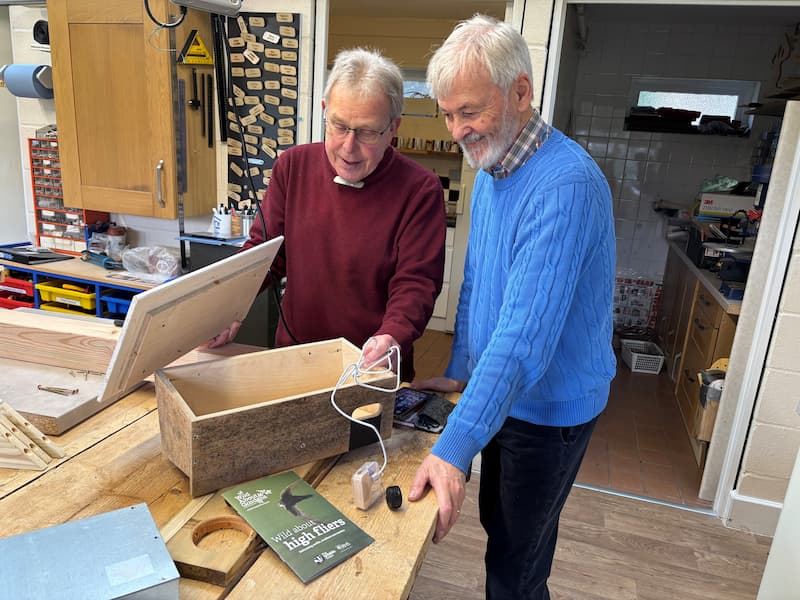
Working with the local Men’s Shed group and the local community, BBOWT is supporting the project and began by sharing practical guidance on how to build high-quality nesting boxes – not just any boxes, but ones designed specifically for species in decline, including house sparrows, starlings and, of course, swifts. Conversations with Phil Hart, co-founder of the Men’s Shed group, who remembered the abundance of swifts from his childhood, sparked an ambition to create a ‘swift street’ right in the heart of Crowthorne.
Turning that ambition into reality has been a true community effort. Local shopkeepers, shop visitors, homeowners, the parish council, and even the fire service have all played a part. My role as Community Organiser been to bring people together, share knowledge and support the project as it takes shape – an approach known as community organising.
The Men’s Shed has taken on the task of building the nest boxes, using durable materials such as marine plywood to ensure they last for years to come. The parish council has helped fund the first batch, while local firefighters have stepped in to assist with installation, which is no small feat as the boxes need to be positioned at least three metres above the ground.
So far, 11 boxes have gone up along the High Street. Each one represents a small but significant step towards giving swifts a future in the village.
Long-term results
These play recordings of swift calls during the early morning and evening, mimicking the sound of an active colony and encouraging young birds to investigate. Four call systems, also built by the Shedders, have gone up to help attract swifts.
While established breeding pairs return to the same nest year after year, it is the younger swifts that will spend time searching for future homes. If they find a suitable site, they will remember it and return in subsequent years to breed. Patience is key. Success won’t happen overnight, but with each passing summer, the chances grow.
Flying high
What is most inspiring about this project is not just what it’s doing for swifts, but how it is doing it. This is conservation led by the community, for the community. From the careful crafting of each nest box to the conversations with local businesses and residents, every step has been driven by people who care about their local wildlife and want to make a difference.
The impact could reach far beyond one High Street. By sharing what works (and what doesn’t) this approach has the potential to inspire similar projects across our region, reconnecting communities with the wildlife on their doorstep.
For now, as this summer’s swifts prepare for the long flight home, there’s a renewed sense of hope in Crowthorne. Look up on a warm evening and you might just catch a glimpse of these aerial acrobats, scything through the air, calling to one another, as they have done for generations.
Swift, swallow or martin?
Introducing the stars of our summer skies: swifts, barn swallows, house martins and sand martins. Here’s how to tell them apart, and how to help them.
Image credits: Swift in flight: Jon Hawkins/Surrey Hills Photoraphy; Swift by nest box: Nick Upton