The water vole fightback

For decades the gravest threat to water vole populations has been the American mink, a non-native yet ruthlessly efficient predator. But could the tide be about to turn? Mammal Project Officer Julia Lofthouse shares some exciting developments.
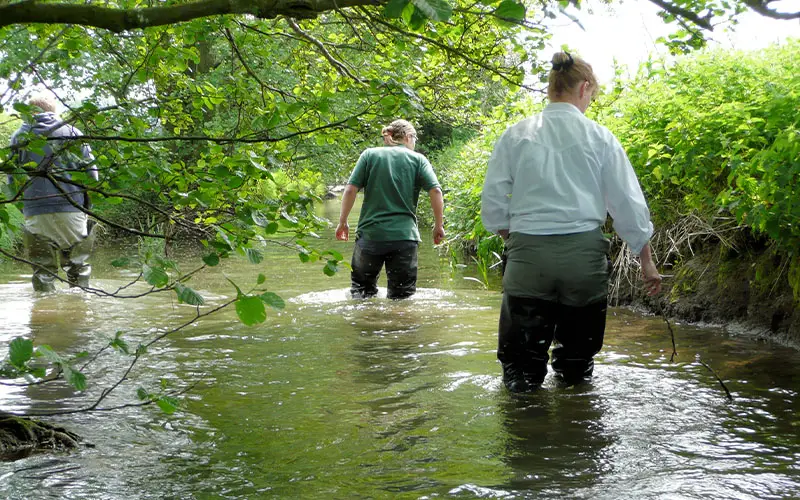
The BBOWT Water Vole Recovery Project is the longest running project in the UK dedicated to water vole conservation. Set up in 1998 in partnership with the Environment Agency, Thames Water and the Canal & River Trust, the project monitors local water vole populations and works to ensure habitat is created and managed sympathetically for water voles.
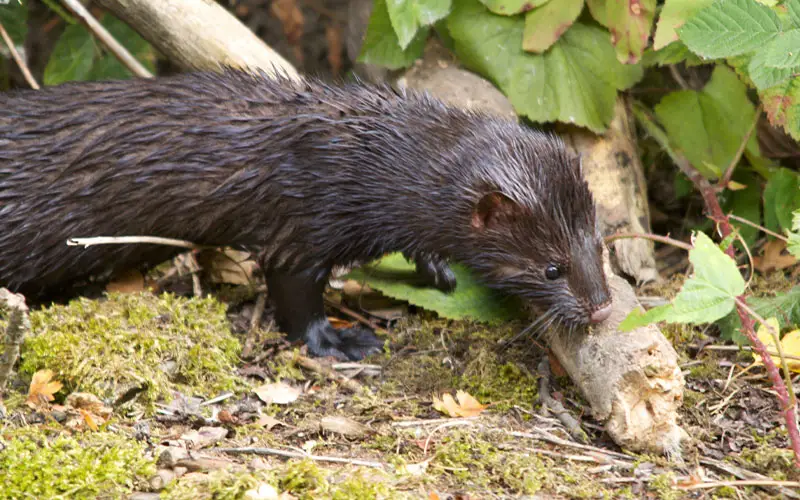
Another crucial element of our work is trapping and dispatching American mink. American mink have been a major driver in the 97% decline of water voles seen across the country over the past 50 years and are now recognised as the main factor hampering their recovery.
Fighting chance
Water voles have many natural predators including foxes, otters, stoats and various birds of prey. Voles have developed their own mechanisms to co-exist with these predators; if they are sitting at the water’s edge and sense danger they will dive into the water and disappear under the water line, kicking up silt as they go to camouflage themselves. They will head for one of their underwater burrow entrances and then hide out in an underground chamber until danger has passed. Sometimes they’ll escape predation, sometimes they won’t, but they at least have a fighting chance.
With mink, however, it’s not a level playing field. Mink were imported into the country for farming in the 1920s, when fur was in fashion, but through a combination of escapees and deliberate releases, they quickly colonised our waterways. As well as being voracious predators, mink are also very good swimmers and the females are small enough to follow water voles into their burrows, rendering the voles’ natural defences completely ineffective.
Trapping mink
BBOWT has been trapping mink in and around local water vole sites for more than 20 years, trapping on average 50-60 each year. This has allowed water vole populations across Berkshire, Buckinghamshire and Oxfordshire to not only survive but steadily increase. Against the backdrop of a national decline, site occupancy by water voles across our three counties has increased by 71% over the past 20 years. We are seeing the impact of trapping mink, but it is crucial that these efforts are sustained if our water vole populations are to continue to flourish.
In 2023 funding from Natural England enabled us to expand mink trapping beyond our local water vole sites, to cover all main waterways across the counties. We were also able to take advantage of the latest technology and deploy alarms which attach to a trap and send a text message to a mobile phone when the trap is triggered. This makes trapping much more efficient, removing the need to check traps daily, while improving response times and animal welfare.
Whilst we were extending and upgrading our mink trapping locally, an exciting project was gathering momentum in the east of the country. A charity called the Waterlife Recovery Trust (WRT) spearheaded a regional mink trapping project, culminating in mink being eradicated from a core area of East Anglia. They proved that with intensive effort on a landscape scale, mink can be dramatically reduced within just two to three years then ultimately eradicated within five!
This project has since pushed out into new areas, including London and Buckinghamshire, and we have been working closely with WRT to ensure a coordinated approach to trapping mink across our county boundaries.
Expanding our work
With recent funding from Thames Water and the John Ellerman Foundation, a private charitable trust, we now have the resources to recruit a new project officer dedicated to managing and expanding mink trapping throughout our counties in line with the WRT methodology. Our officer will be working to update mink traps with trap alarms and to further expand the trapping network to include tributaries across our three counties.
We are currently partnering with WRT on two further bids for funding that cover the whole of central and southeastern England. If successful, an impressive 40% of England would then be covered by coordinated mink trapping projects. With these additional resources and with mink being trapped in our surrounding counties, Berkshire, Buckinghamshire and Oxfordshire will for the first time have the real possibility of becoming mink-free once and for all.
This is fantastic news for both local water vole populations and the national picture. Just maybe, if we all work together and intensively trap mink over the next few years, we can remove the water voles’ biggest threat and safeguard their future so that they might once again become a common sight along our waterways.
The Water Vole - A Quick Guide
Discover how to identify the ever-endearing water vole in this short video guide.
Image credits: Water vole: Terry Whittaker/2020VISION; Mink: Tom Hibbert; Surveying for water voles: Karen Lloyd