
Resilient by nature

Eleanor Johnston, Climate Change Manager at the Wildlife Trusts, introduces a new era of nature conservation, defined by extremes.
From record-breaking heatwaves to devastating floods, the impacts of climate change are no longer distant threats but everyday realities reshaping our landscapes and our lives.
Across the UK, The Wildlife Trusts are already helping nature adapt. We’re working on a national scale to build resilience, restore habitats and show the huge benefits of putting nature at the heart of climate adaptation, not just for wildlife, but for people too.
Take the Pevensey Levels in Sussex: a vast, low-lying area of grassland that has become increasingly dry due to climate change and water extraction. Sussex Wildlife Trust is revitalising this important wetland to hold more water again, helping to bring back the wading birds and waterfowl that would have once been in abundance.
When the Project Officer, Charlotte Pestell, visited the site in May last year during an exceptionally dry spring she “knew things had gone well when it was still a complete necessity to wear wellies”. She described the “delight to walk onto the reserve, splashing along and marvelling at the big skies reflected in the new pools.”
At The Wildlife Trusts we regularly review progress and consider what we must do differently to prepare for the extreme and unpredictable weather that has become the norm. Our latest progress report, Resilient Nature, celebrates climate adaptation work and collaborations across the UK.
For many years, our work has been guided by the Lawton Principles – creating more, bigger, better and joined up natural habitats. Now, we are building on these principles through more flexibility, more diversity and the ability to bounce back. We’re applying this to a wide range of habitats, helping wildlife and people adapt to the changing climate.
Coastal
Sometimes, adapting to climate change means accepting that nature will have to change too. In 2013, a powerful tidal surge flooded Suffolk Wildlife Trust’s Hazel Wood Marshes Nature Reserve with saltwater. This meant that freshwater habitats and species were lost, but now the reserve has been transformed. New saltmarsh is developing and with it new flora and fauna is flourishing.
Peatlands
Across The Wildlife Trusts we’re restoring peatlands – when healthy, they absorb rainfall and release it slowly, helping to reduce flooding downstream. This work also supports rare wildlife too, including the whitefaced darter dragonfly. Thanks to Cumbria Wildlife Trust‘s extensive restoration of peatbogs at Drumburgh Moss, this dragonfly is on the rise.
Woodlands and wetlands
Derbyshire Wildlife Trust’s Derwent Living Forest project is creating wooded habitats and wetlands to connect the National Forest with the soon-to-be established Northern Forest. This living corridor will allow species to move more freely, adapt and survive as climate conditions shift.
Bringing adaptation home
Climate adaptation isn’t just about vast landscapes – it can begin in towns and our own gardens too. Every patch of green space can help wildlife move between a mosaic of habitats, provide water, food, shelter and shade, and make our homes more resilient to extreme weather.
Let’s advocate for adaptation
Our weather is swinging between extremes – but we all have the power to help nature adapt. Whether it’s by supporting your local Wildlife Trust, creating a pond, or simply letting your garden grow a little wilder, every action counts.
Let’s challenge the idea of tidy, manicured gardens and instead embrace spaces full of life – messy, diverse and resilient. These are the places that will withstand drought, heavy rain and heatwaves, while providing sanctuary for beetles, butterflies, birds and us too.
But beyond our own gardens, we must call for climate adaptation on a national scale – with nature at its heart. As extreme weather events become more frequent, it’s vital that our governments plan ahead to prioritise resilience. You can make a difference by writing to your MP, AS or MSP: share your experiences, highlight local climate challenges and urge them to support action that helps both nature and communities thrive.
When we give nature the space and time to adapt – whether in a vast forest, sprawling peatland, a saltmarsh or a small garden pond – nature has extraordinary resilience, can restore balance and protect us in return.
If you build it
"During the spring drought and summer heatwaves, the pond becomes a vital refuge for wildlife, and a cool and shady spot for me. Goldfinches flit through the splashes as a blackbird bathes in the shallows. Tadpoles wriggle, then transform into tiny frogs — living proof that small changes can make a big difference.
"Creating these nature-friendly spaces can help us as well as wildlife. Plants soak up water, reduce flooding and cool the air. Replacing concrete, artificial turf and paving with planted borders and lawns can significantly lower flood risk and prevent overheating in our homes.”
New saltmarsh
Face off
Pine fresh
Carbon heroes
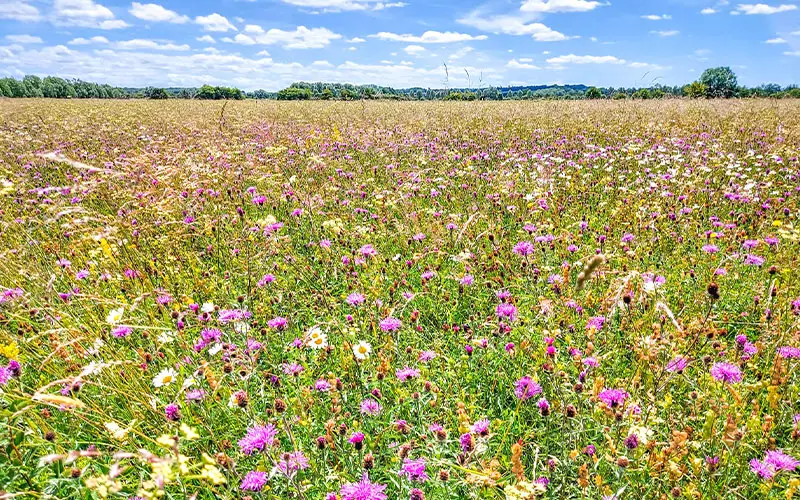
BBOWT is working alongside the Floodplain Meadows Partnership and the Thames Valley Wildflower Restoration Project to restore a section of the River Thames floodplain, connecting internationally important wildlife habitats. Soil samples collected from sites within the project area show that restored meadows store over 80 per cent more carbon than nearby arable fields, making them invaluable in the fight against the climate crisis.
Climate-friendly gardening tips
With an estimated 24 million gardens in the UK, our gardens are a vast living landscape and can help us adapt to climate change.

Dig Ponds

Grow wild

Add logs

Plant trees
Image credits: Lapwing: Mark Hamblin/2020VISION; Common frog: Guy Edwardes/2020VISION; Spoonbill: Bertie Gregory/2020VISION; White-faced darter: Vicky Nall; Pine marten: Terry Whittaker/2020VISION; Chimney Meadows wild flowers: Colin Williams