
Wild Spring
Explore and enjoy the best of the season’s wildlife
Soaring swifts
Breeding swifts arrive by early May and fly directly into their familiar nest sites; they haven’t stopped flying since they left last summer. They gather airborne grass and feathers to refresh their nests.
Swifts fly in groups and nest in colonies beneath roof eaves, in nestboxes and nest-bricks within walls. In June the aerial groups grow with the arrival of young, non-breeding birds to create ‘screaming parties’ swooping fast and spiralling high.
By the end of July nestlings are well-fed and doing wing press-ups to strengthen flight muscles. Early in August the adults leave for Africa and the youngsters soon follow.
Swift, swallow or martin?
Introducing the stars of our summer skies: swifts, barn swallows, house martins and sand martins. Here’s how to tell them apart, and how to help them.
Good hare day
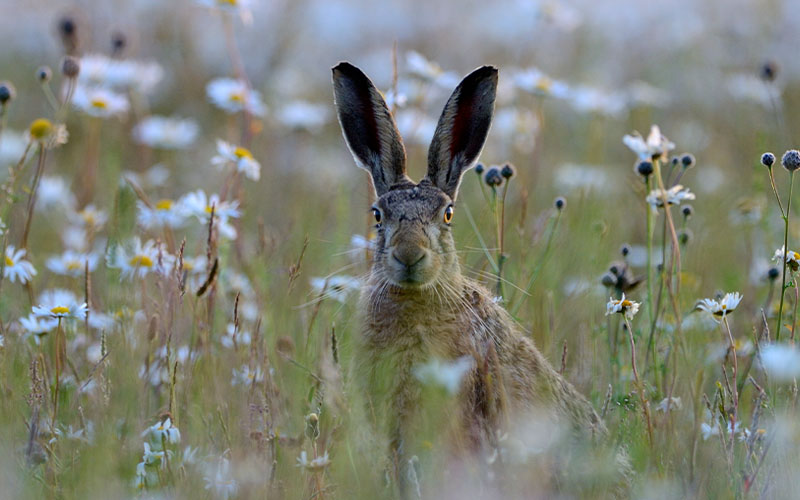
Brown hares with their golden-tipped fur, amber eyes and remarkable zig-zagging runs are creatures of mystery and beauty. Introduced to Britain by European travellers during the Iron Age, their springtime ‘boxing’ behaviour gives us a chance to see them. The female ‘does’ are in season for just a few hours, releasing pheromones that send the bucks into a frenzy. Does stand on their strong hindlegs to repel the bucks with their forepaws and give them the run around to test their stamina.
Hares can leap up to four metres and run incredibly fast, sometimes reaching 45mph. They are solitary creatures that crouch in a shallow ‘form’ of flattened grass during the day before feeding at night.
Does give birth to three or four litters a year. Leverets are born fully furred with their eyes open and stay hidden during daytime. Their mother feeds them at dusk for the first few weeks until they can forage for themselves.
Wild but true
In country lore Jack is a colloquial term for the buck, while Jill is the term for the doe.
- See brown hares at Chimney Meadows, Oxfordshire, in the fields at Meadow Farm in Buckinghamshire, and at Seven Barrows, Berkshire.
Birds of the riverbank
Reed warbler
Egyptian goose
Kingfisher
Little egret
Plants for pollinators
LOOK OUT FOR
LISTEN OUT FOR
Contents
Image credits: Swifts, little egret, Egyptian goose, and bumblebee and foxglove: Jon Hawkins/Surrey Hills Photography; Brown hare: David Tipling/2020VISION; Reed warbler: Matthew Hazleton; Kingfisher: Malcolm Brown; Green grasshopper: Alan Price/Gatehouse Studio